
Table of Contents

INTRODUCTION

SmartBin is a smart waste management system that helps reduce waste, improve recycling and optimized waste collection. It uses sensors to monitor and track the amount of waste in a bin, alerting waste management authorities when it is full and needs to be emptied.”
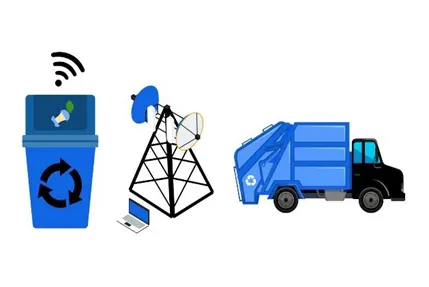
The Internet of Things (IoT) is playing an increasingly important role in the development of Smartbins. Smartbins are connected to the Internet and can be monitored and managed remotely. They are equipped with sensors that detect when the bin is full and send an alert to the waste management company. This allows them to be emptied more efficiently and reduces the amount of time spent driving around collecting waste. The IoT also enables smartbins to be connected to other devices, such as garbage trucks, allowing them to communicate with each other. This allows for more efficient waste collection and helps reduce emissions from waste collection vehicles. Additionally, data collected from the sensors can be used to optimize waste collection routes and schedules.

Types of SmartBins

  1. Motion-Sensing SmartBins: These smart bins have motion sensors that detect movement and open on their own when a person approaches them. It works well in crowded public spaces where individuals need to swiftly dispose of their trash without touching the bin.
  1. Solar-Powered SmartBin: These bins have solar panels installed to power their internal functions. Since it can be positioned wherever that receives sunlight, it is ideal for places where there is no access to a power source.
  2. A composting SmartBin is a container made specifically to collect food waste and turn it into compost. It has an integrated composting system that converts the organic material into soil-enriching material.
  3. Automated SmartBin: This kind of bin has sensors that can detect when it is full and alert the waste collection provider. It is perfect for congested situations where there is a lot of rubbish that needs to be disposed of fast and effectively, such as malls and airports.
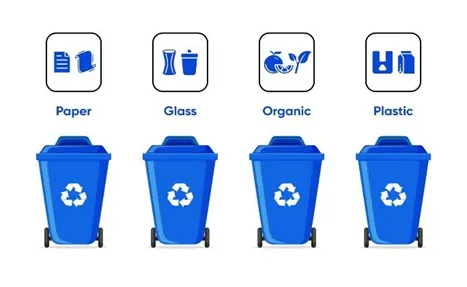
  4. SmartBin: This kind of bin is made to sort various recyclable items into distinct categories. For sorting paper, plastic, glass, and other materials, it contains several compartments. It is ideal for crowded public spaces where people must promptly dispose off their trash without manually sorting it.

Type of Data Transfer

SmartBins typically transfer data such as weight, temperature, humidity, and proximity. This data is used to monitor the fill level of the bin and alert when it needs to be emptied.

Types of Sensors

Smartbins typically use a range of sensors, including: infrared sensors, ultrasonic distance

sensors, weight sensors, light sensors, and temperature sensors.
Working of SmartBin

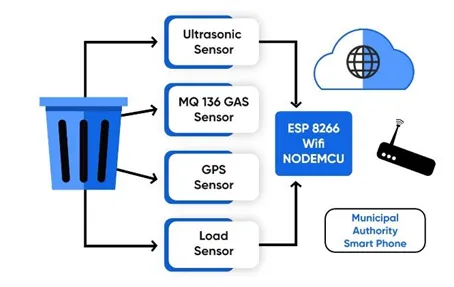
A smartbin is a waste management system that keeps track of and controls waste levels using sensors, wireless technology, and software. The sensors count the amount of trash in the bin and send this information to a platform that is situated in the cloud. This information can then be used to produce reports on waste levels and to decide when the trash can need to be emptied. The device can also be used to monitor the condition of the bin and to plan the best routes for garbage pickup vehicles.

Data Management System

  1. Sensor Data Collection: The smartbin has sensors mounted on it that gather data on environmental variables such as temperature, humidity, weight, and others.
  2. Data processing: To assess the volume and makeup of the garbage in the bin, algorithms are used to process the data that has been collected.
  3. Data Storage: To facilitate future analysis and use as a resource, the processed data is kept in a database.
  4. Data analysis: Next, trends and patterns in the waste composition are found by examining the previously saved data. This aids in determining the type of garbage present and when the bin needs to be emptied.
  5. Waste Collection: The waste is gathered and properly disposed of based on the analysis.
  1. Data Reporting: Reports that can be used to track garbage collection and disposal activities are produced using the data gathered and processed. These data can also be used to pinpoint regions that need to have better waste management.
PROBLEM

  1. Security and privacy concerns: IoT devices are susceptible to malware, cyberattacks, and data breaches, which can result in the loss of private data.
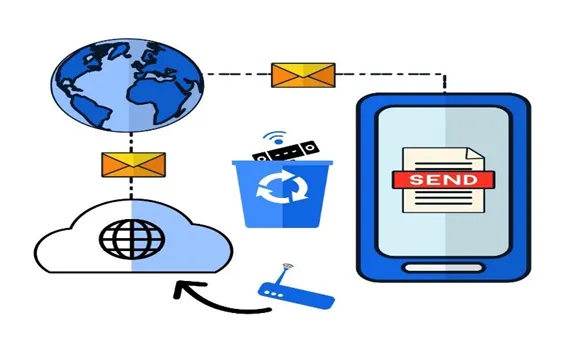
  2. Interoperability Problems: IoT devices frequently employ various communication protocols that aren’t necessarily mutually compatible.


  1. Network Congestion: IoT devices produce a lot of data, which can clog the network and affect the speed of other connected devices.
  2. Limited Battery Life: A lot of IoT devices have a short battery life and require frequent charging.
  3. Price: The cost of purchasing and maintaining IoT devices might be high.
  4. Complexity: IoT gadgets are frequently complicated and need some technical know-how to operate.

SOLUTION

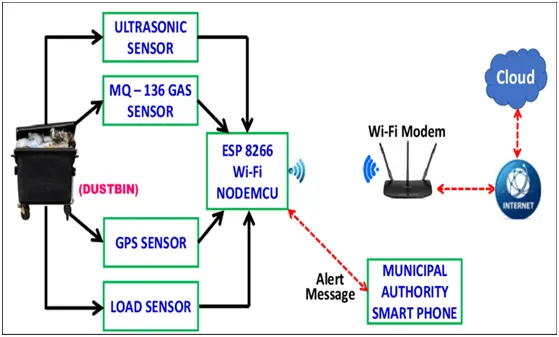
The development of a system that will gather and examine data from the bin’s sensors in order to track usage and level is the answer to an IoT-based smartbin. Then, with the aid of this information, waste management initiatives can be predicted, areas for improvement can be found, and waste collection routes can be made more efficient. The technology can also be used to monitor the contents of the bin and notify authority workers when it needs to be emptied.

How to Upgrade?

  1. Verify the IOT SmartBin’s firmware version as of right now. To access the device’s settings, visit the app or website of the manufacturer.
  2. Get the most recent firmware update from the manufacturer’s website. Please be sure to download the appropriate version for your device.
  3. Use a USB connection to connect your computer or laptop to the IOT smartbin.
  4. Access the manufacturer’s software or app and adhere to the firmware upgrade instructions.
  5. Unplug the IOT smartbin from your computer after the firmware has been updated.
  6. To ensure that the new firmware is properly installed, restart the device.
  7. Check the functionality of the IOT smartbin by testing it.
  1. Install Sensors: Install sensors on the waste bin to detect the level of waste and send real-time notifications if the bin is full.
  2. Smart Labeling: Place smart labels on the waste bin that can be scanned to collect data and send notifications if the waste bin is full.
  3. Connected to Cloud: Connect the waste bin to the cloud and integrate it with existing data systems. This will help in collecting more detailed data about the waste bin usage.
  4. Automated Waste Collection: Integrate the waste bin with automated waste collection systems to ensure efficient waste management.
  5. Self-Cleaning: Install a self-cleaning system on the waste bin to ensure that the bin is kept clean and sanitized.
  6. Smart Waste Tracking: Track the waste levels in real-time and receive alerts when the bin is full. This will help in preventing overflowing and reduce the overall waste generated.
  7. Pay-as-you-Throw (PAYT): Enable pay-as-you-throw (PAYT) systems to encourage authority workers to reduce their waste. This will help in reducing the overall waste generated.
  8. Educate the Public: Educate the public on the importance of reducing their waste and encourage them to use the smart waste bins.

Worldwide Use

At the government level, there are several types of smartbins being used around the world, including solar-powered bins, connected waste bins, and automated waste collection bins. Solar-powered bins are used to collect and store solar energy, which is then used to power waste collection and sorting systems. Connected waste bins are connected to the internet and can be monitored remotely to measure waste levels and optimize collection operations. Automated waste collection bins are equipped with sensors to detect and collect waste and sort it for recycling

or composting. Examples of countries using smartbins at the government level include: –

United Kingdom: The government has implemented automated waste collection bins in some cities and towns. –

Singapore: The government has installed a network of solar-powered bins to help reduce waste and conserve energy.

United States: The government has implemented connected waste bins in several cities to help monitor and manage waste levels.

Japan: The government has implemented automated waste collection bins in some cities and towns to help reduce waste and conserve resources.

APPLICATION

Nova Auto Technologies provides SmartBin management solutions for Authorities and Municipalities all around the globe and aids in lowering the cost of waste collection and disposal. It can be used for a number of purposes, such as:

  1. At industrial sites, SmartBin can be used to monitor and coordinate trash disposal and pickup. It can be used to monitor the amount of waste produced, spot waste concentrations, and improve collection routes.
  2. Commercial buildings: SmartBin can be used to monitor and control garbage collection and disposal in commercial buildings. It can be used to monitor the amount of waste produced, spot waste concentrations, and improve collection routes.
  3. Public areas: Waste collection and disposal may be managed and tracked in public areas using SmartBin. It can be used to monitor the amount of waste produced, spot waste concentrations, and improve collection routes.
  4. Educational establishments: SmartBin can be used to monitor and control garbage collection and disposal in educational institutions. It can be

used to monitor the amount of waste produced, spot waste concentrations, and improve collection routes.

  1. Events: SmartBin can be used during events to oversee and control waste disposal and pickup. It can be used to monitor the amount of waste produced, spot waste concentrations, and improve collection routes.

REFERENCES

  1. “SmartBin: An Intelligent Waste Management System using Internet of Things (IoT)” by P. M. Srinivasan, A. Rajkumar, and K. Saravanan (2019).
  2. “SmartBin: A Cloud-Based Waste Management System Using Internet of Things” by P.V. Rajesh and M. Vignesh (2019).
  3. “SmartBin: A Real-Time Monitoring System for Waste Management Using IOT” by S. K. Ramesh, A. S. Raju, and P. R. Chari (2019).
  4. “SmartBin: An IoT-based Waste Management System” by G. Srinivasan and S. Jayakumar (2018).
  5. “SmartBin: An IoT-Based Waste Management System for Smart Cities” by S. K. Ramesh, A. S. Raju, and P. R. Chari (2018).