INTRODUCTION
Industrial automation is the use of robotics and software to enable autonomous systems to control equipment and procedures used in a variety of trades.Industries use automation to boost output, lower labor costs, employee benefits costs, and other related costs while improving precision and flexibility.Automation goes beyond mechanization by using a specific machinery mechanism with the assistance of human operators to carry out a task. However, automation eliminates human participation through the use of logical programming instructions and robust machinery.
IoT is bringing revolution to almost every aspect of our lives by changing how we do things. The use of Smart IoT devices is on the rise with all the industries heavily investing in IoT
IoT is useful for Industrial Automating processes to make them efficient, inexpensive, and adaptable to user needs connecting industrial equipment to the cloud and
exchanging real-time data that can have a significant impact on efficiency, productivity, and uptime. It also aids in the development of future technology.
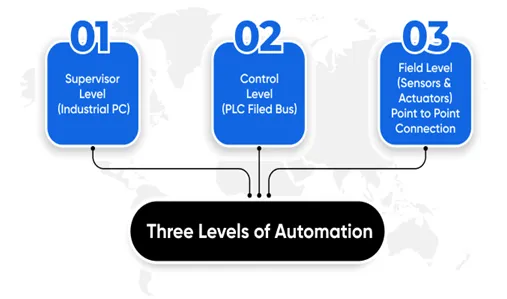
Three Levels of Industrial Automation
In the hierarchy, the terminal equipment, such as sensors and actuators, is grouped under field level. The communication between a Field Level device and its related PLC is often based on a point-to-point connection. Sensors like temperature, optical, pressure, etc. and actuators like motors, valves, switches, etc. are interfaced to a PLC through a field bus. Therefore, a variety of suitable input power supplies are needed for a smooth operation.
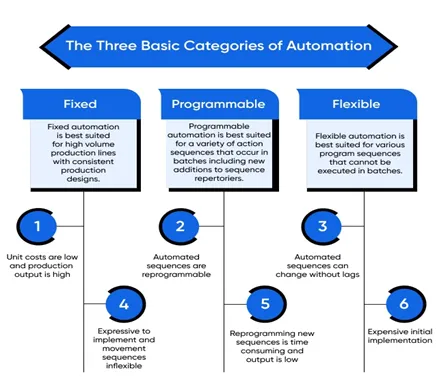
Three Categories of Industrial Automation
- FIXED: It typically requires a large upfront investment and is used for tasks that are repetitive and do not change often.
- PROGRAMMABLE: It is typically less expensive than fixed automation and is
used for tasks that vary in complexity or frequency.
3. FLEXIBLE: It is typically more expensive than fixed or programmable automation and is used for tasks that are constantly changing or require frequent adjustment.
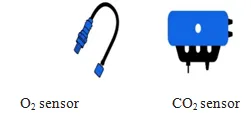
Role of Sensors (Oxygen and Carbon dioxide)
In Industrial Automation to measure the levels of oxygen (O2) and carbon dioxide (CO2) in the air, oxygen and carbon dioxide sensors are employed. The performance of industrial machinery can be impacted by Oxygen O2 and carbon dioxide CO2, therefore this is significant in a range of industrial operations. In combustion engines, for instance, a lack of oxygen can lead to incorrect combustion or wasteful fuel use. A surplus of corrosion or the production of dangerous by products might result from an excessive amount of carbon dioxide. Industrial automation systems can modify the parameters of equipment to ensure optimum operation by precisely measuring the air’s levels of oxygen and carbon dioxide.
PROBLEM
The quick and successful development of smart factories around the world is presenting numerous manufacturing enterprises with opportunities to meet security challenges.Digital risks can stop entire manufacturing lines, costing manufacturers a lot of money. These threats include malware, manipulation, sabotage, defective firmware updates, and counterfeit parts. Theft of data, intellectual property (IP), and procedural know-how may occur if a company’s infrastructure has any security flaws.
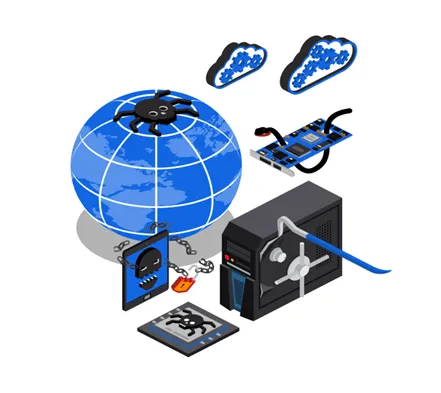
Industrial automation systems are vulnerable to a variety of data hacking techniques, including:
- Data Spoofing: This is when an attacker attempts to gain access to a system using false data.
- Data Tampering: This is when an attacker attempts to alter or manipulate data to gain access or disrupt operations.
- Data Theft: This is when an attacker attempts to gain access to sensitive data or information by stealing it from the system.
- Denial-of-Service Attacks: This is when an attacker attempts to disrupt operations by flooding the system with traffic and requests.
- Password Cracking: This is when an attacker attempts to gain access to a system by guessing or cracking passwords.

A company’s competitive edge frequently comes from this sensitive information; thus, it needs to be protected carefully.
SOLUTION
Data hacking in industrial automation cannot be solved by a single method. The best strategy is to use layered security, which combines both physical and digital security measures. Using safe locks, access control systems, and physical barriers to block access to vital systems are all examples of physical security measures. Strong passwords, encryption, and other forms of data protection could all be included in cyber security measures. To identify and stop attacks, organizations should also regularly monitor systems and patch them.