
INTRODUCTION
In order to create a secure and functional urban environment, the concept of a cybersecurity automated smart city integrates the deployment of cutting-edge technologies like Artificial Intelligence (AI), the Internet of Things (IoT), and Big Data. Users of this technology can access a range of services and data while concurrently monitoring, spotting, and quickly responding to cyberthreats. It can also be utilized to improve the quality of life in cities by providing safer and more efficient public services, using less energy, and promoting a more sustainable environment.
 Users of this technology can access a range of services and data while concurrently monitoring, spotting, and quickly responding to cyberthreats. It can also be utilized to improve the quality of life in cities by providing safer and more efficient public services, using less energy, and promoting a more sustainable environment.

Building a safe and secure smart city using IoT technology is the philosophy behind an automated smart city. This idea uses linked devices, sensors, and networks to gather data and analyze it in order to deliver better services, improved security, and increased efficiency. This concept attempts to create a secure and efficient environment where all citizens can benefit from modern technology’s advantages. These includes features like automated traffic control, smart housing, and energy management.
WHY IS IT IMPORTANT?
IoT cybersecurity is necessary for any automated smart city since it helps protect the information and technologies that power the city’s infrastructure. Assuring the security of all networks, systems, and connected devices as well as the data that is gathered, saved, and moved between them is made easier by cybersecurity. This protects the city from damaging attacks and data breaches while also ensuring the data’s dependability and accuracy. Cybersecurity can help to protect people and organizational s privacy by maintaining the security of their private information.
HOW IS IT IMPLEMENTED?
Implementation Steps
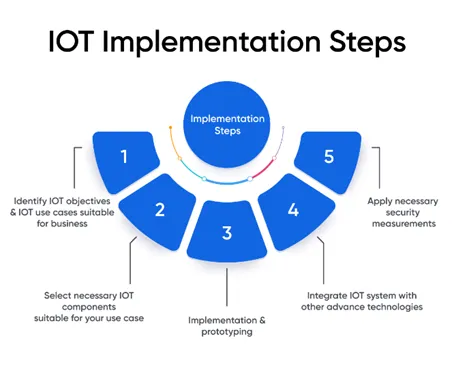
Ways to Implement
IoT cybersecurity can be implemented in a smart city in a variety of ways.
1.The first is to employ a centralized system that can monitor and control every connected device in the city. Any malicious activity, such as unauthorized access or malicious code, should be recognized by this system, and it should be able to take necessary action. Additionally, the system must be able to locate network faults and take appropriate action to correct them.
2.The second method of integrating IoT cybersecurity for a smart city is the use of distributed systems that are capable of managing and monitoring individual devices around the city. This makes it possible to have more exact control over the devices and can help with the early detection of any malicious behavior that might spread over the network. These technologies can also be utilized to identify network weaknesses, allowing for quicker response times and more effective mitigation strategies.
3.The third method of IoT cybersecurity for a smart city is the combination of centralized and distributed systems. As a result, the best of both worlds is made possible, with the central system providing an overall view of the network while the distributed systems provide more precise administration over individual devices. The right
steps can be taken by quickly detecting harmful activity.
PROBLEM
The absence of standards and security protocols is the fundamental issue with IoT cybersecurity for smart cities. Cyberattacks are more likely as smart cities become more interconnected. It might be challenging to guarantee that all devices are secure and up to date with the most recent security protocols given the wide variety of devices and systems available. The lack of security in the design of many IoT devices also makes them open to assault.
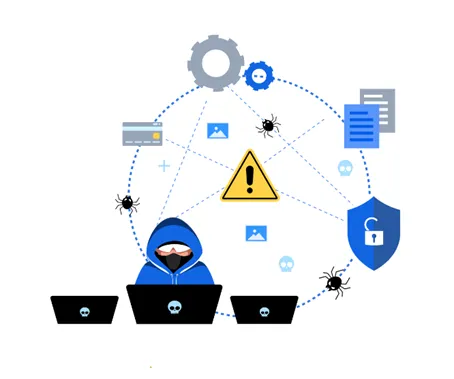
Finally, it is challenging to guarantee that all systems are secure and up to date due to a lack of coordination between many agencies and organizations that oversee the various components of a smart city.
SOLUTION
The implementation of a thorough approach with the following elements will solve the issues with IOT cybersecurity in smart cities:
- Setting up safe authentication procedures for all linked devices.
- Putting effective data security and encryption procedures in place.
- Creating safe firmware and software updates.
- Spreading awareness of the value of security among consumers and companies.
- Making use of machine learning and artificial intelligence to quickly identify and address threats.
- Using safe cloud architectures to handle IoT devices and store data.
- Forming successful public-private collaborations to exchange knowledge and resources
- Creating a thorough incident response plan to lessen the impact of cyberattacks
FUTURE CHALLENGES
- Ensuring Privacy and Security: One of the greatest challenges of cyber security in a smart city is to ensure that data is kept secure and confidential. Smart cities have access to a large amount of data from various sources, such as sensors and IoT devices, which can be vulnerable to cyber-attacks. Therefore, it is essential to ensure that data is encrypted and protected from unauthorized access.

- Integrating Security Protocols: Smart cities use a variety of technologies and systems that need to be integrated with each other. This integration can create a complex network, which increases the risk of security vulnerabilities. Therefore, it is important for cities to ensure that appropriate security protocols are established